
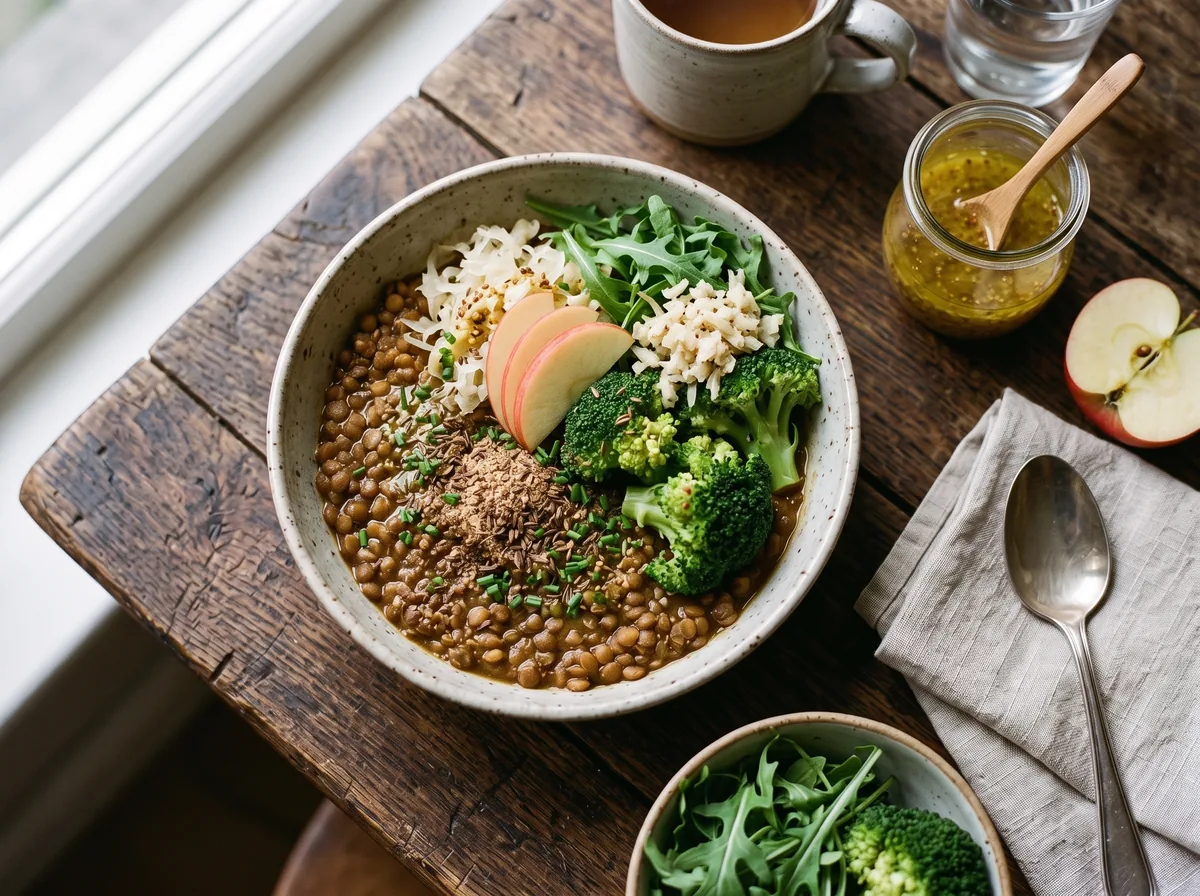
A recipe for digestion and the liver: fibre from lentils, broccoli and Jerusalem artichoke, live bacteria from raw sauerkraut. Apple and a mustard dressing turn it into a well-rounded dinner. Eight of the thirteen ingredients are in the Top 100 of the ranking, overall Top 100.
Open the recipe straight in the Food Secrets app. The app reads the ingredients, links each one to the nutrient database and recalculates the rank for your goal.
Ingredients for 2 servings
- Lentils, cooked300 g
- Broccoli250 g
- Sauerkraut120 g
- Apple100 g
- Jerusalem artichoke100 g
- Rocket40 g
- Linseed, ground15 g
- Olive oil1 tbsp
- Apple cider vinegar1 tbsp
- Mustard2 tsp
- Turmeric, ground1 tsp
- Caraway seeds½ tsp
- Chives5 g
Plus salt and pepper to taste. They are not in the ingredient list, so the rank above matches what the app calculates after the import. Cooked lentils: from about 120 g of dried lentils, or from a jar.
Method
- Cut the broccoli into small florets, peel the stalk and slice it. Steam for 6 to 8 minutes, until tender but still bright green.
- For the dressing, stir the mustard, apple cider vinegar, turmeric and olive oil with 1 to 2 tbsp water, salt and pepper until smooth.
- Warm the lentils with the caraway and a splash of water in a pan for 3 to 4 minutes and mix them with half of the dressing.
- Coarsely grate the apple and the well-washed Jerusalem artichoke with their skins on. Finely chop the chives.
- Divide the lentils and broccoli between two bowls and add the rocket and the apple and artichoke slaw alongside.
- Now add the sauerkraut – and add it cold on top, because heat kills the live lactic acid bacteria. Drizzle with the rest of the dressing and sprinkle with linseed and chives.
Why this bowl supports digestion and the liver
Every ingredient carries its band from the Food Secrets Digestion & Liver ranking. A band is stable – a place number changes with every data release, and the app shows you the exact figure.
- Top 10SauerkrautRaw and unpasteurised, it brings live lactic acid bacteria, plus fibre from cabbage.
- Top 20Jerusalem artichokeInulin, a fibre that gut bacteria live on – and a nutty sweetness.
- Top 50LinseedMucilage and fibre; ground, so it does not pass through undigested.
- Top 50BroccoliFibre and the sulphur compounds of the cabbage family.
- Top 50TurmericCurcumin counts directly in the Digestion & Liver rank. The oil in the dressing helps to absorb it.
- Top 50LentilsFibre and resistant starch, the base of the bowl.
- Top 50RocketA cruciferous leaf with a slight bite.
- Top 100CarawayThe classic spice for cabbage and pulses.
- Top 250Apple cider vinegarThe acid that ties sauerkraut, apple and mustard together.
- Top 250ChivesA mild member of the onion family that keeps the bowl fresh.
- Top 500MustardIt binds the dressing and has always gone with sauerkraut.
- Top 500AppleSweetness and freshness against the acidity of the sauerkraut.
Averaged across all ingredients, the bowl lands in the Top 100. The olive oil carries no band: for this goal it sits in the lower half of the ranking – one tablespoon rounds off the dressing.
Variations
- More protein: two soft-boiled eggs.
- Without Jerusalem artichoke: use a whole apple or grate in 100 g raw carrot.
- Warmer in winter: place the sauerkraut next to the warm lentils for a moment, but do not cook it.
- To take along: cook the lentils and broccoli the day before and chill them; add the slaw, sauerkraut and dressing just before eating.
More about the liver and gut
Why raw sauerkraut, and what a detox diet really does, is explained in the article Liver detox foods – what really helps. All foods for this goal are on the page Digestion & Liver.
Ingredients onto the shopping list, recipe into the week plan – in one step.
Frequently asked questions about this recipe
Why does the sauerkraut go in at the end?
Raw, unpasteurised sauerkraut contains live lactic acid bacteria, and heat kills them. Tinned sauerkraut is usually pasteurised and no longer has live bacteria. So for this bowl, raw sauerkraut from the chilled aisle is worth it. The fermented foods that rank highest for this goal are on the page Digestion & Liver.
Can you eat Jerusalem artichoke raw?
Yes. Raw, it tastes nutty and slightly sweet, a little like artichoke. It contains a lot of inulin, which can cause bloating in people who are not used to it. Then start with 50 g or steam it with the broccoli. Its rank for every goal is in the Food Rankings.
Does this bowl detox the liver?
No – no recipe can. Your liver and kidneys do that themselves. The bowl brings what supports the gut and liver in studies: fibre, a fermented food and no alcohol. What detox diets really do is explained in the article Liver detox foods – what really helps.
Which foods are good for digestion?
In the Food Secrets ranking Digestion & Liver, fermented soy foods such as natto and tempeh come first, together with kimchi and sauerkraut and mushrooms such as porcini and morels. Close behind are sesame, kale, Jerusalem artichoke, chia seeds and raw broccoli. The full list is in the Food Rankings.
What does “Top 100” mean at Food Secrets?
The app rates more than 1000 foods and gives each a rank per goal. “Top 100” means: averaged across all ingredients, this recipe sits among the best hundred for the goal Digestion & Liver. We print bands rather than place numbers, because the database keeps growing. The app works out the current value after the import.
More healthy recipes and food rankings
- All healthy recipes by goal – recipes for digestion, the brain, blood sugar, heart, immune system and other health goals.
- Baked salmon with kale, walnuts and dill – the recipe for brain and cognition.
- Digestion & Liver — the nutrition goal in the app – all foods by what they do for the gut and liver.
- Recipe generator: import and analyse healthy recipes – read any recipe from the web, calculate nutrients and create the shopping list automatically.
The bands on this page are a snapshot of the Food Secrets ranking. The database keeps growing, which is why we name ranges rather than place numbers – the app works out the current value at any time. The information provided is for general education and does not replace medical advice or treatment.