
Wild herbs list with photos
Besides many other healthy foods, you'll find a list of the most common edible wild herbs with photos - all compact in one app.
With one click on the filter for wild plants, you find the most common edible wild herbs and can identify them with the help of the info button as well as gather further insights.
Our illustrated edible wild herbs list is at the same time a compact edible wild plants list – ideal for identifying native wild herbs and finding recipes.
Edible wild herbs: the list with photos
Twelve of the most common edible wild herbs in Central Europe – each with a photo, its botanical name, the season, the part you eat, and the one feature that tells it apart from its double.
Before you forage: Several edible wild plants have poisonous doubles. Wild garlic is mistaken for lily of the valley and autumn crocus, and both can kill. Never identify a wild plant from a photo on the internet – not even from ours. Use a field guide, go with somebody who knows the plants, and leave standing whatever you are not sure about.
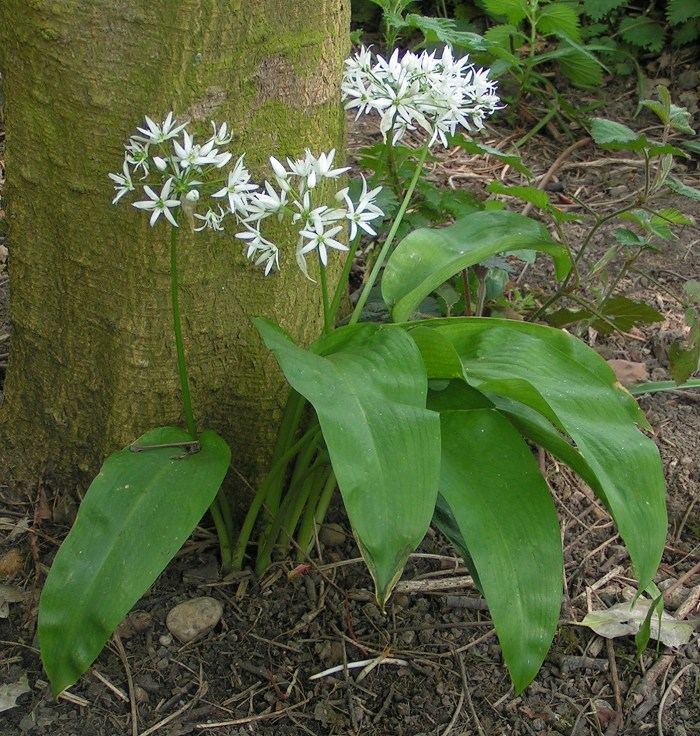
Wild garlic
Allium ursinum
Season: March–June
Edible: young leaves before flowering
How to spot it: Crush a leaf: wild garlic smells clearly of garlic. Every leaf sits on its own stalk and is matt on the underside.
Careful: ☠️ Mistaken for lily of the valley and autumn crocus – both can be deadly. Neither smells of garlic.
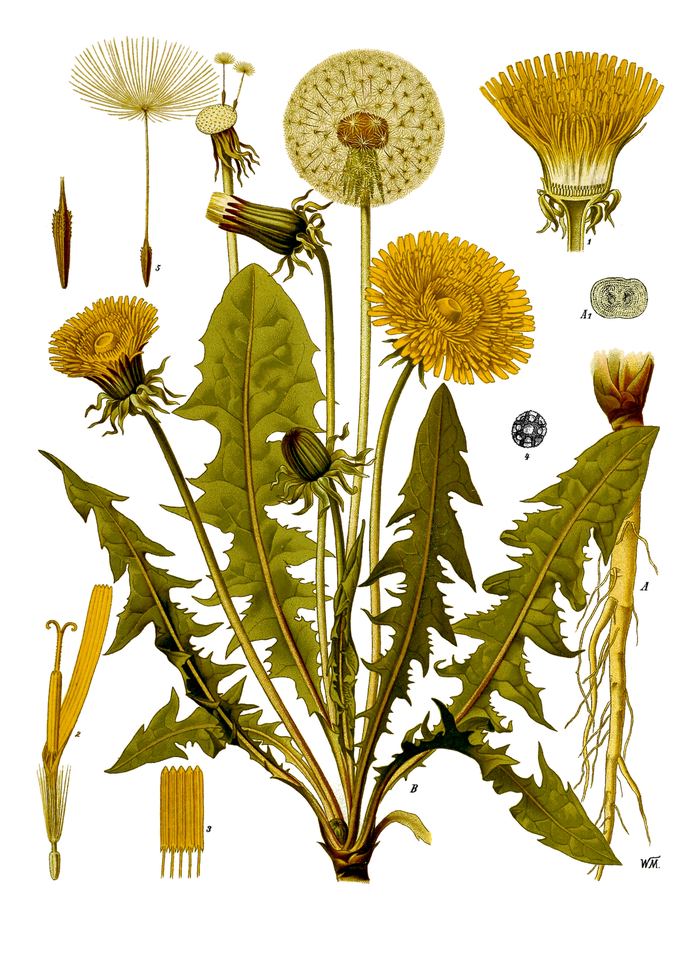
Common dandelion
Taraxacum officinale
Season: March–December
Edible: young leaves and flowers
How to spot it: The stalk is hollow, leafless and bleeds white milky sap. The leaves are deeply toothed and all sit in a rosette on the ground.
Careful: Mistaken for other yellow daisy-family flowers. Those are not poisonous, only more bitter.
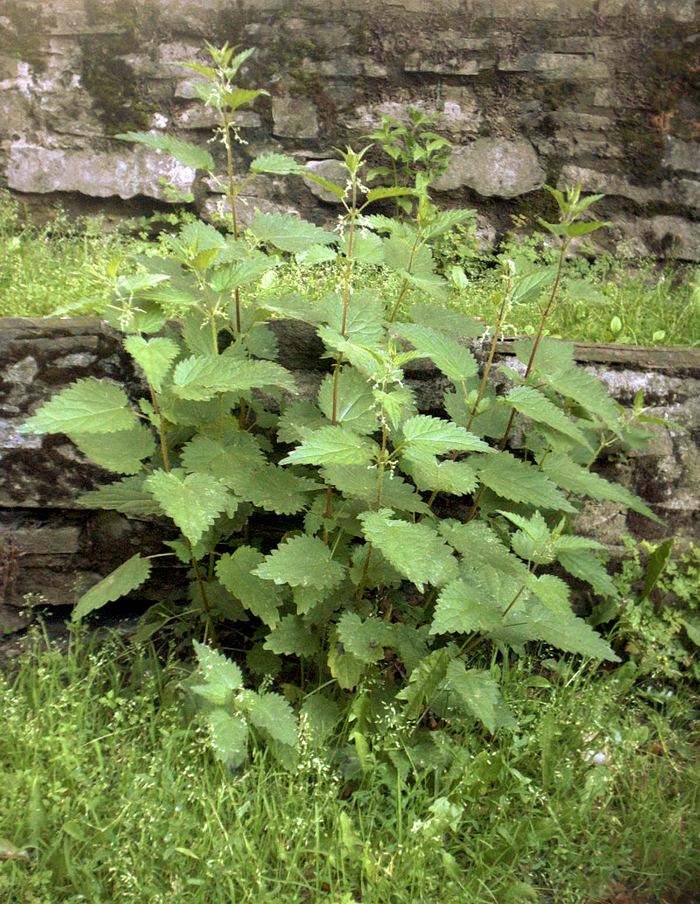
Stinging nettle
Urtica dioica
Season: April–November
Edible: young leaves before flowering
How to spot it: It stings. Leaves opposite each other, coarsely serrated, with fine stinging hairs on leaf and stem.
Careful: Mistaken for the harmless dead-nettle – that one does not sting and has showy lipped flowers.
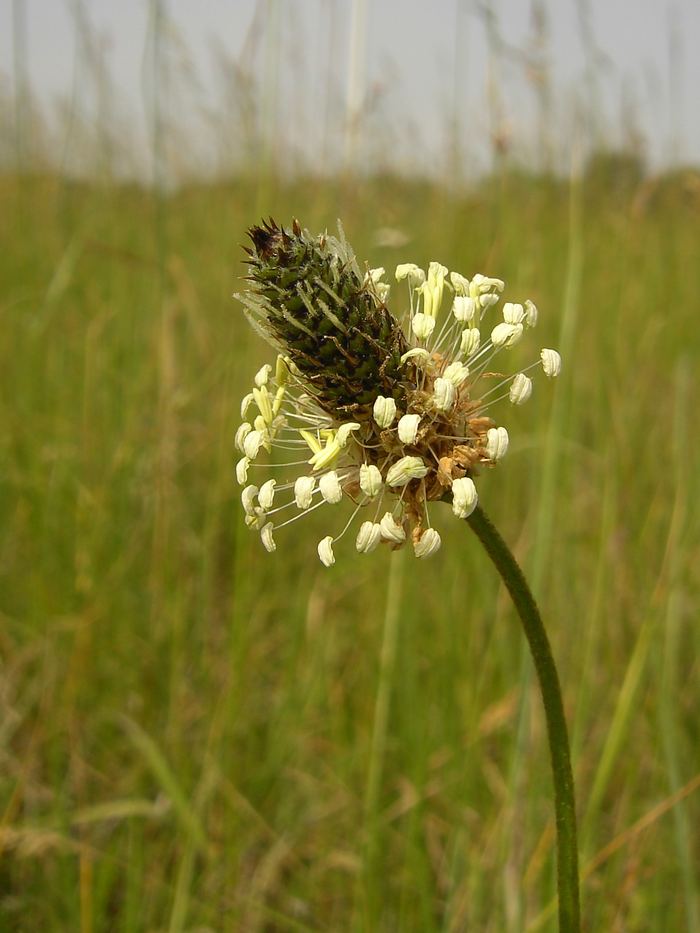
Ribwort plantain
Plantago lanceolata
Season: April–December
Edible: leaves
How to spot it: Narrow, lance-shaped leaves with parallel veins that stay behind as threads when you tear the leaf.
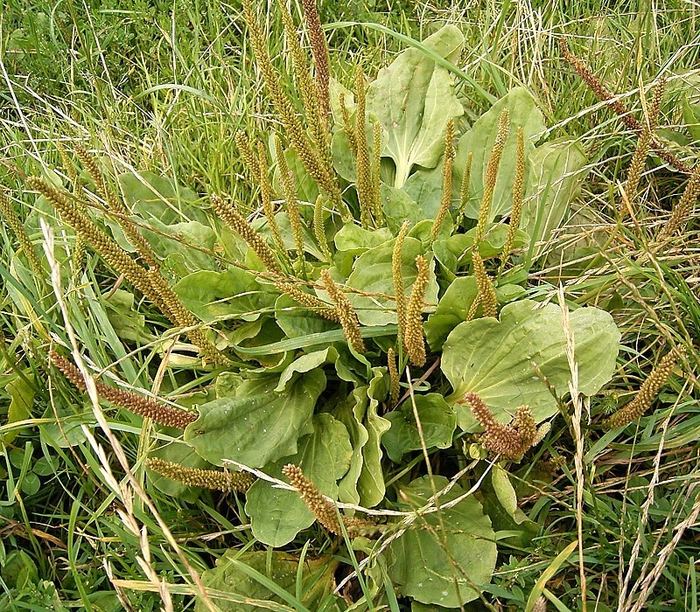
Broadleaf plantain
Plantago major
Season: April–November
Edible: young leaves
How to spot it: Broad, oval leaves, also with parallel veins, flat on the ground – it likes to grow right in the middle of trodden paths.
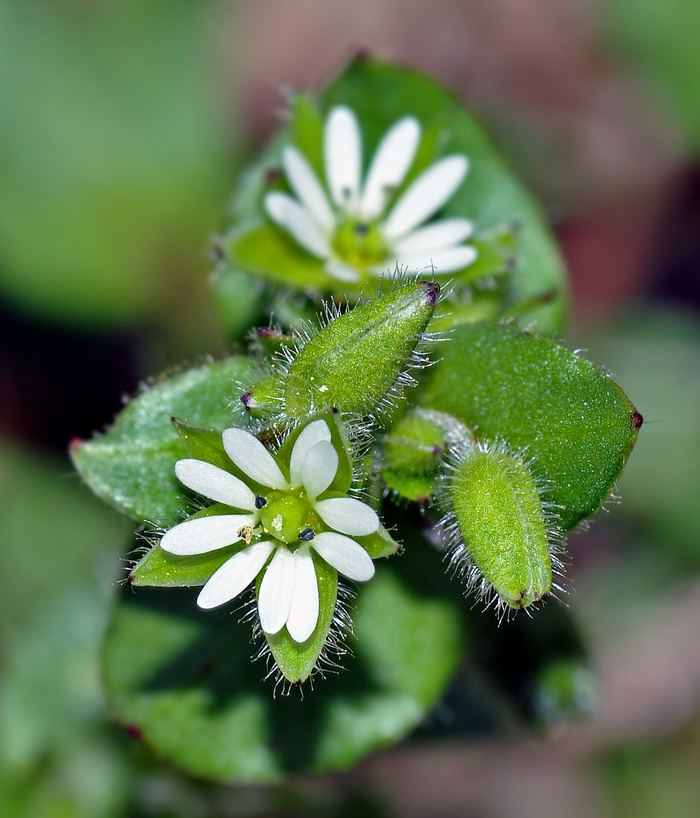
Common chickweed
Stellaria media
Season: March–December
Edible: the whole plant before flowering
How to spot it: One single line of hairs runs along the stem and changes side at every node. Nothing else does that.
Careful: ☠️ Mistaken for scarlet pimpernel (poisonous) – that one has no line of hairs and orange-red flowers.
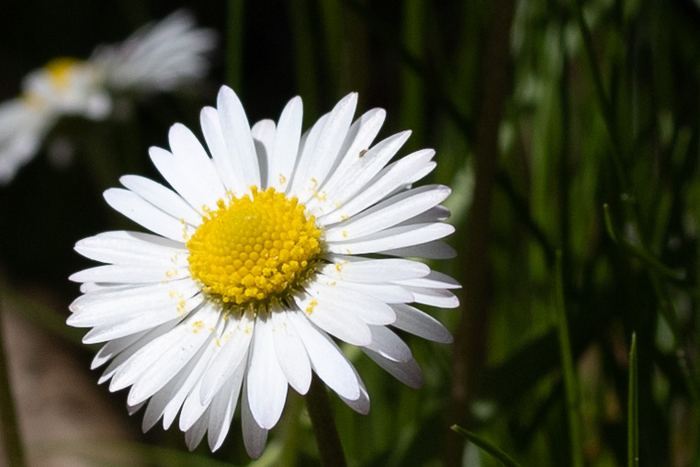
Common daisy
Bellis perennis
Season: March–December
Edible: leaves and flowers
How to spot it: A single flower on a leafless stalk, leaves in a flat rosette on the ground, spoon-shaped.
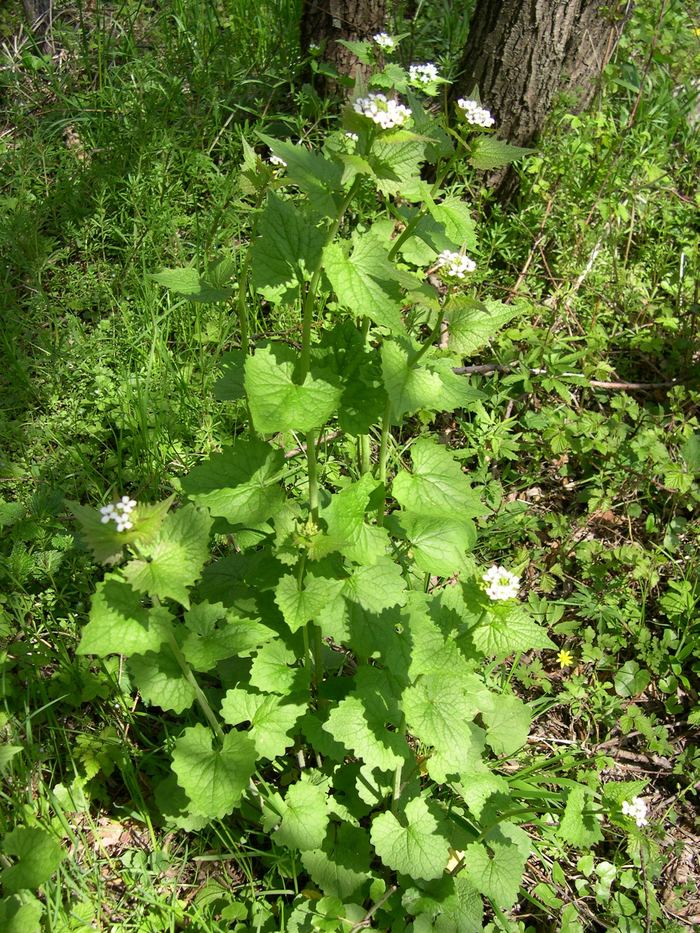
Garlic mustard
Alliaria petiolata
Season: March–June
Edible: leaves
How to spot it: Crushed leaves smell of garlic, but the plant is a cabbage-family plant: four white petals above kidney-shaped lower leaves.
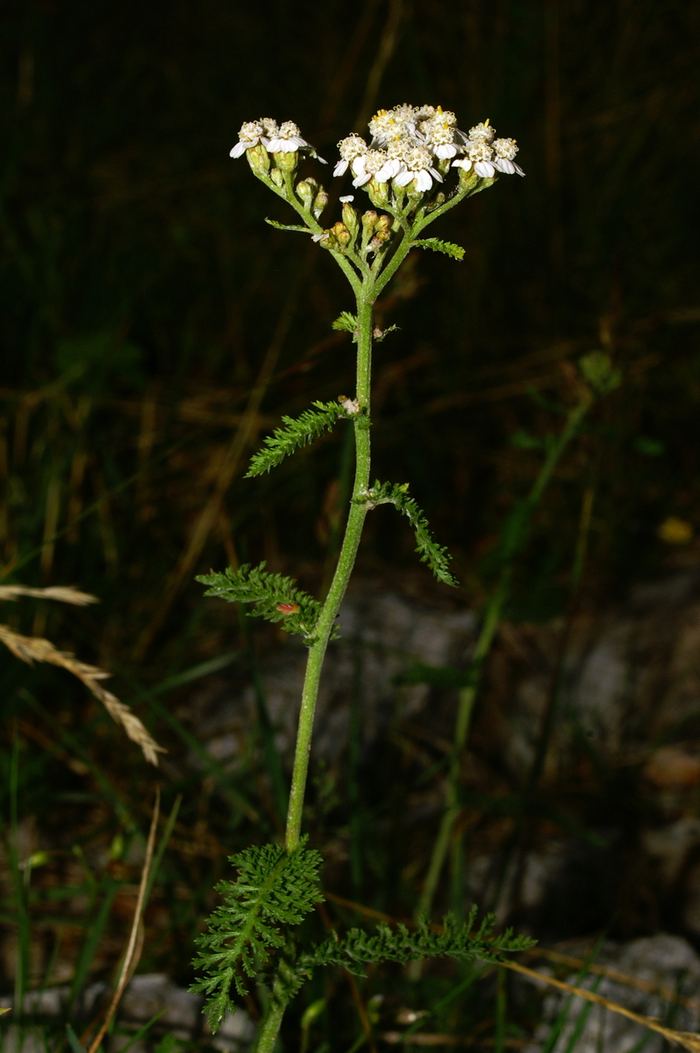
Yarrow
Achillea millefolium
Season: February–November
Edible: leaves and flowers
How to spot it: The leaves are finely divided like a fern – hence the name milfoil, thousand-leaf. Flowers in flat white umbels, stem hairy.
Careful: ☠️ Mistaken for poison hemlock – deadly. That one has a hairless stem with red blotches and smells unpleasantly of mouse urine.
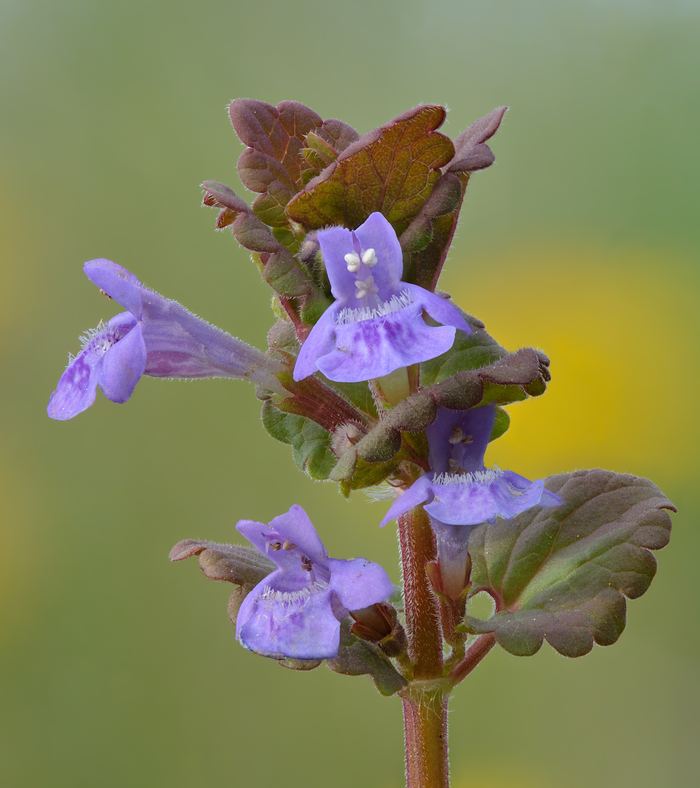
Ground ivy
Glechoma hederacea
Season: March–October
Edible: leaves before flowering
How to spot it: Creeping, with rounded kidney-shaped, scalloped leaves and violet lipped flowers. The stem is square in cross-section.
Careful: Strong in taste – use small amounts.
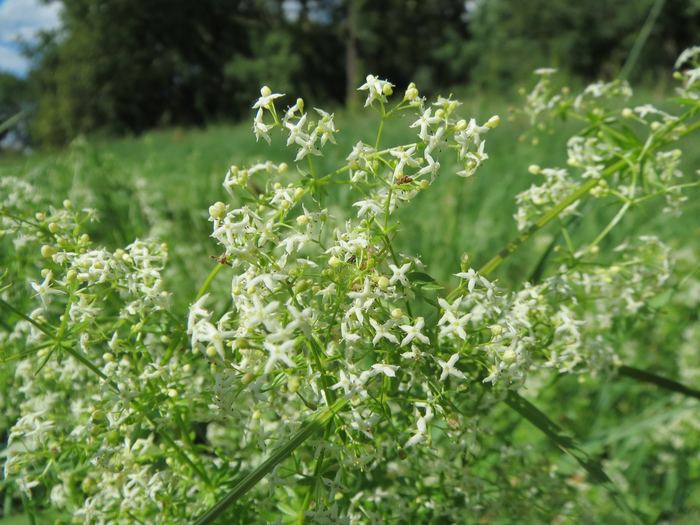
Hedge bedstraw
Galium mollugo
Season: April–October
Edible: shoots and leaves
How to spot it: Narrow leaves stand in whorls of eight around the square stem, with a cloud of tiny white flowers above.
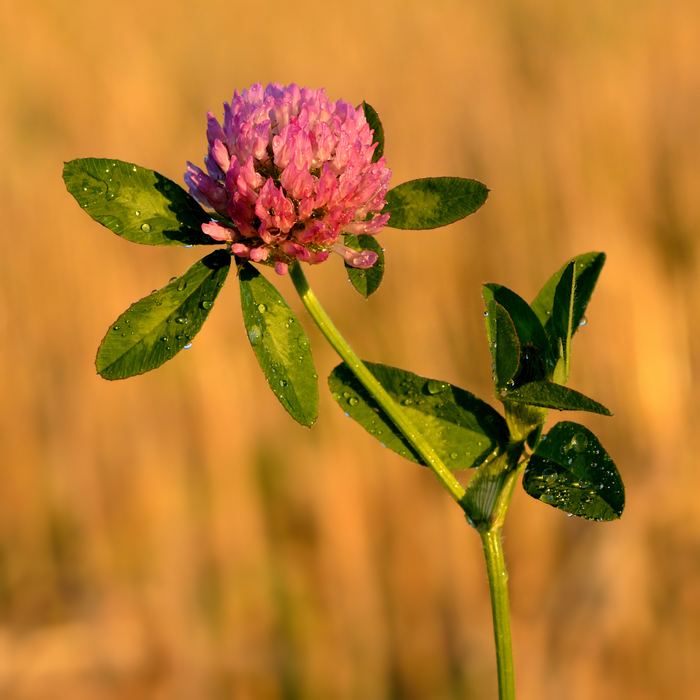
Red clover
Trifolium pratense
Season: May–October
Edible: leaves and flowers
How to spot it: Three leaflets with a pale V-shaped mark, and the dense pink-red flower head above them.
The three dangerous doubles
These three are not edible. They are here because they are regularly mistaken for the herbs above – and because a comparison only helps when both pictures sit side by side.
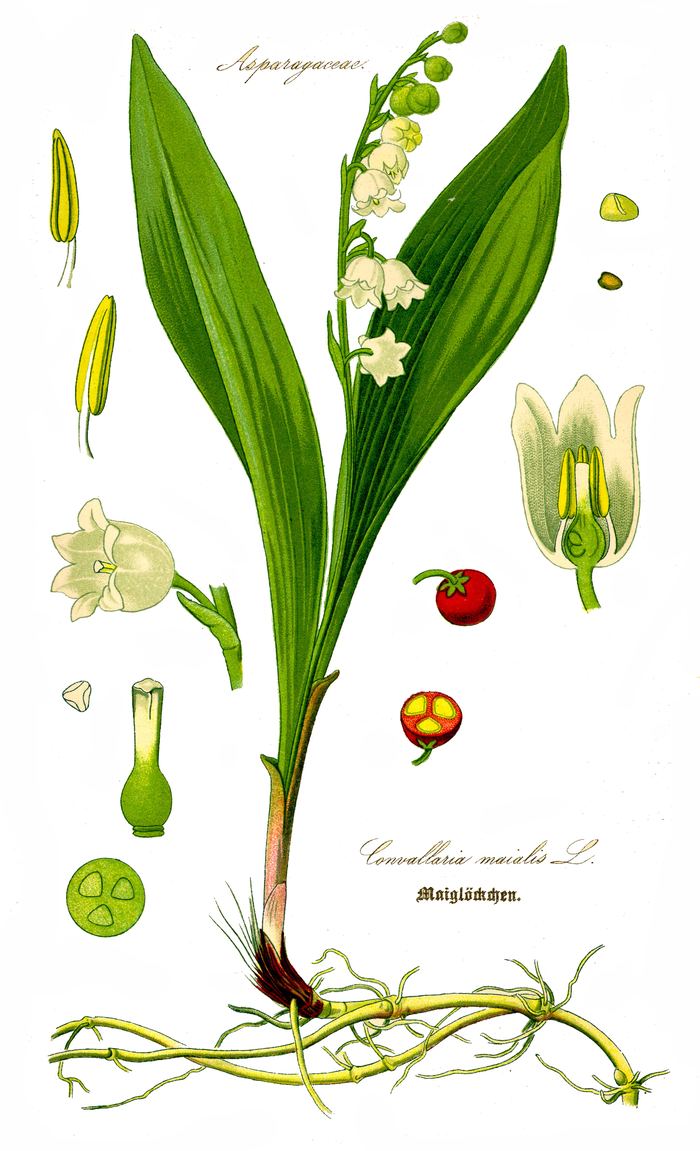
☠️ Lily of the valley
Convallaria majalis
Mistaken for: wild garlic
How to spot it: Several leaves from one shoot, glossy underneath, and no smell of garlic. Every part is strongly poisonous.
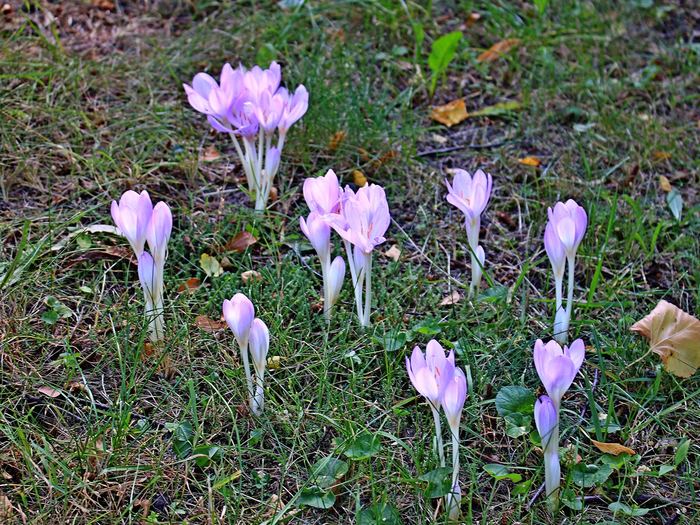
☠️ Autumn crocus
Colchicum autumnale
Mistaken for: wild garlic
How to spot it: Leaves without a stalk, straight out of the ground, thick and stiff, no smell of garlic. A few grams can kill.
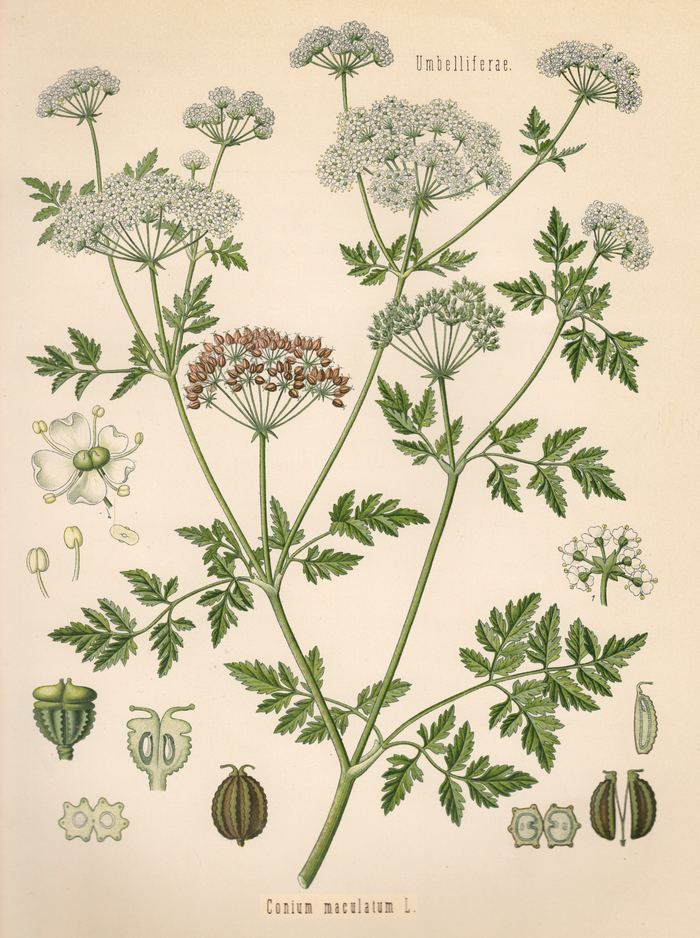
☠️ Poison hemlock
Conium maculatum
Mistaken for: yarrow and cow parsley
How to spot it: Hairless stem with red to purple blotches, unpleasant smell. One of the most poisonous plants in Europe.
Image credits: Wikimedia Commons – Bärlauch (CC BY-SA 3.0), Löwenzahn (Public domain), Brennnessel (CC BY-SA 3.0), Spitzwegerich (CC BY-SA 3.0), Breitwegerich (CC BY-SA 3.0), Vogelmiere (CC BY-SA 2.5), Gänseblümchen (CC BY-SA 4.0), Knoblauchsrauke (CC BY-SA 3.0), Schafgarbe (CC BY 2.5 si), Gundermann (CC BY-SA 4.0), Wiesen-Labkraut (CC0), Rotklee (CC BY-SA 4.0), Maiglöckchen (Public domain), Herbstzeitlose (CC BY-SA 3.0 de), Gefleckter Schierling (Public domain). Licence details and author for each image on its Commons page.
Wild herbs list and filter
Find wild herbs and seasonal foods - with just one click.
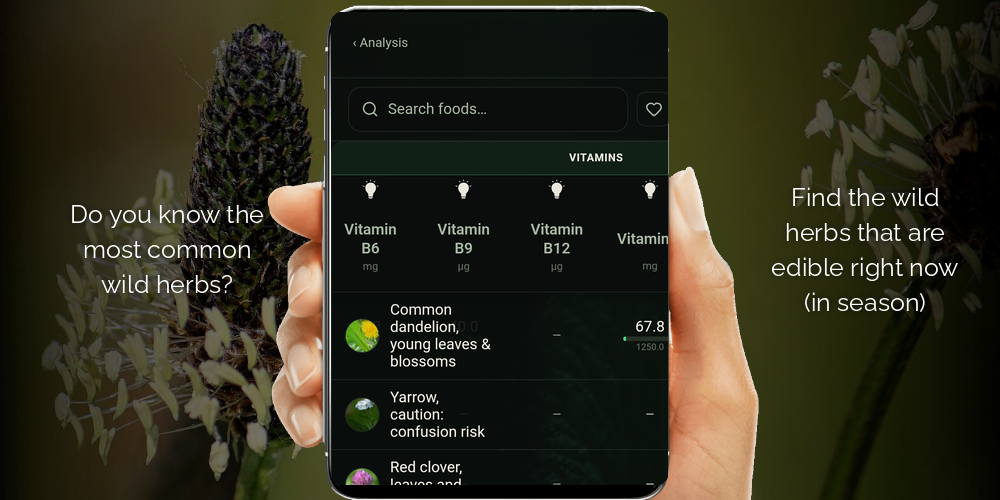
Seasonal wild herbs
In our innovative, illustrated food list you also find out which wild herbs and foods are currently in season in your region. With the info button you can identify them really easily.
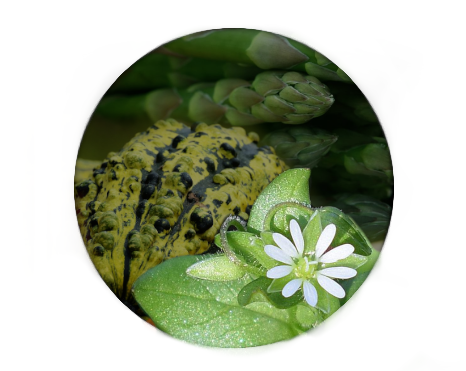
The season filter shows you the seasonal wild herbs of the current month with one click. This lets you expand your regional and seasonal foods and do something for our environment.
Herbs & what they contain
In the list, besides photos and seasonal and further info, you also find what the wild herbs contain.
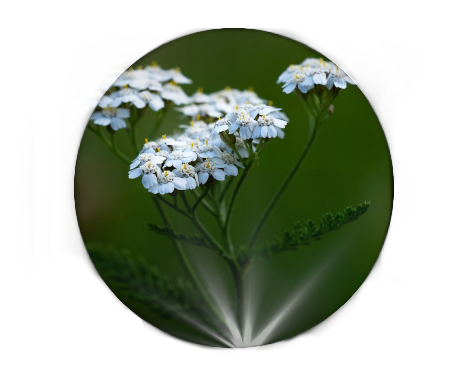
In the anti-inflammatory foods, besides wild and culinary herbs, other foods are also rated by what they contain.
Herbs for your body
In the app you find not only edible wild herbs, but also herbs that have a positive effect on a body system or organ.
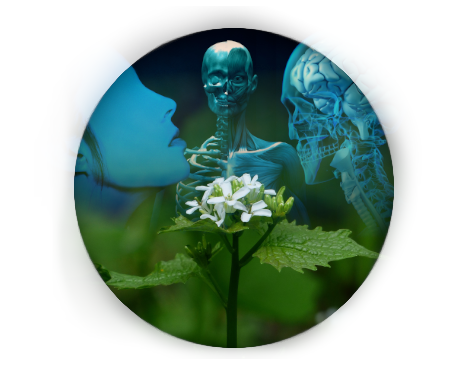
Find edible wild herbs with photos, season and nutrients.
Edible wild herbs
Find the most common edible wild herbs in our easy-to-use app all about nutrition.
This lets you find healthy wild herbs in pretty much every square metre of natural meadow without searching for long - simply, for free and deliciously!
Ribwort plantain
Ribwort plantain (Plantago lanceolata), also called narrowleaf plantain or snake's tongue, doesn't just look like a snake's tongue - and its young leaves are edible.
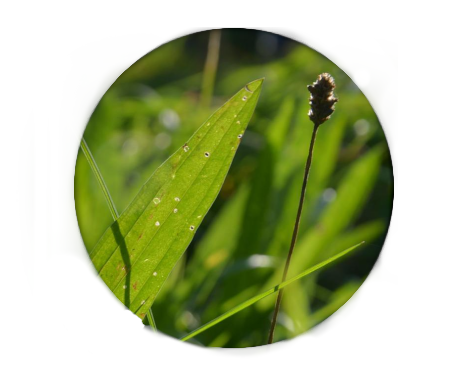
Do you know what else it's good for, and can you tell it apart from broadleaf plantain or from poisonous plants?
Find more recipes yourself...
Dandelion
You probably know the dandelion (the „blowball“) too - who doesn't know the yellow flower with the seeds flying around and the white milky sap of the stems…
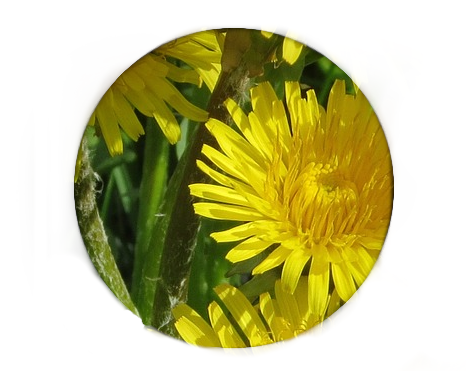
Do you also know what it contains and the effect on our body systems and organs? Do you know when you'd better not eat the wild herb?
Find more recipes yourself...
Nettle
The ultimate vitamin C booster... The nettle has significantly more vitamin C than, say, a blackcurrant - which has a top vitamin C content in our food list - in the nutrient table with 1000+ foods you can filter and sort not only by vitamin C but by all other nutrients too.
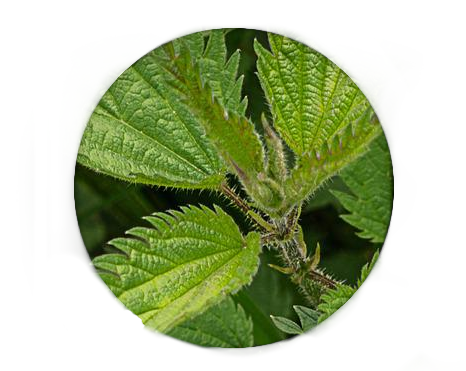
The nettle also scores with many other nutrients - find out! You can also use it as a substitute for spinach or as an organic, free fertiliser for your plants.
Find more recipes yourself...
Wild & culinary herb recipes
Besides wild herbs, you also find a large number of culinary herbs in the Food Secrets mobile app.
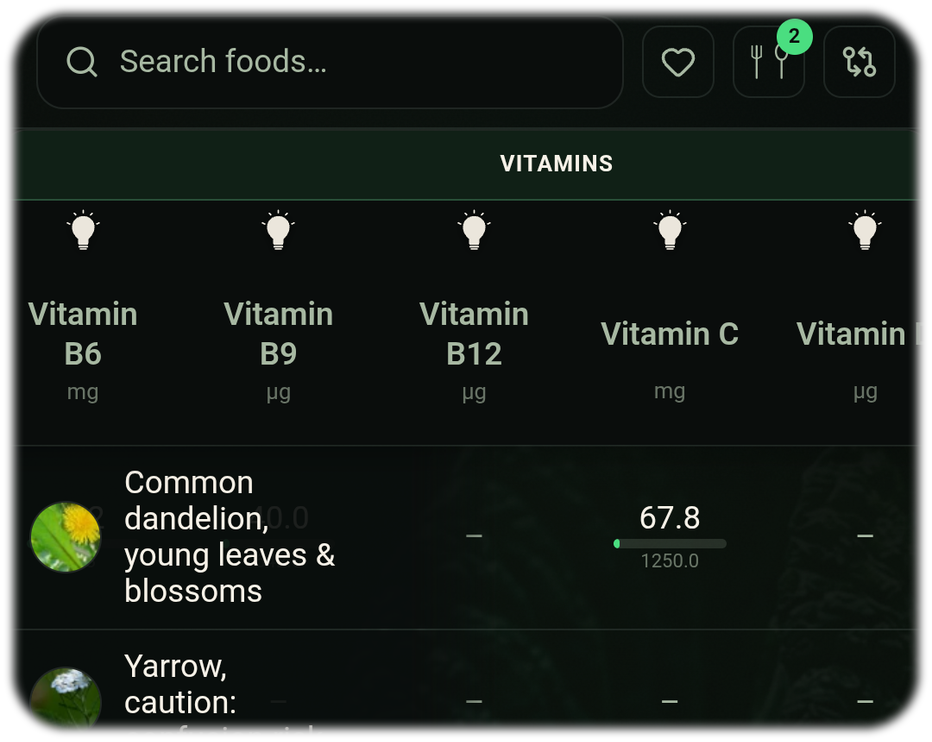
Integrate the wild and culinary herbs into your meal plan and generate healthy culinary and wild herb recipes with the recipe generator.
Import directly: wild herb recipes
Tip: after importing, you can analyse the nutrient values and create the shopping list with one tap.
Food ranking
The wild herbs and culinary herbs are also rated by all our Food Rankings.
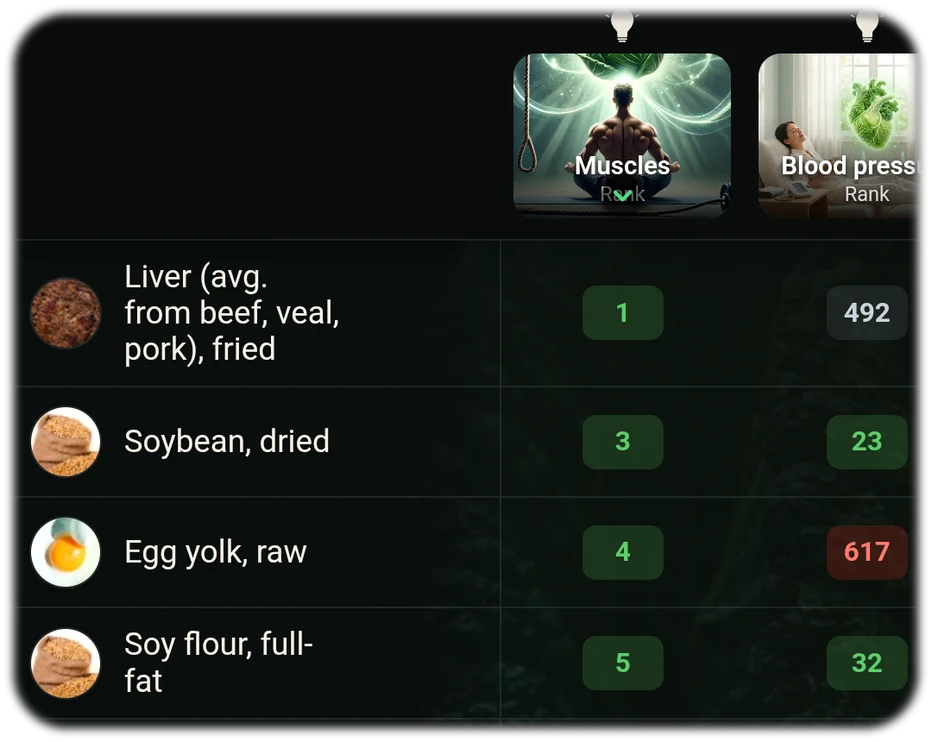
This lets you find out which herbs you can use for your goals. Use them to bring variety and nutrients into your diet and strengthen your body with healthy nutrition.
FAQ – identify wild herbs app
Which app to identify wild herbs?
Food Secrets – with a wild herbs filter, an illustrated list, season info and effect profiles (e.g. anti-inflammatory, microbiome).
How does the app help with safe identification?
Info cards with characteristics, look-alikes & season windows; in addition the app leads you to recipes & nutrient values.
How do I find an edible wild herbs list with photos?
In the Food Secrets app: Analysis → Ingredients → filter „Wild herbs“ – there you see an illustrated list with info.
How do I find more recipes with edible wild herbs?
Via the recipe generator you can search for e.g. dandelion, nettle or ribwort plantain recipes, import them and analyse the nutrient values.
Which wild herbs are in season right now?
Use the season filter (Analysis → Ingredients → filter „Season“) for seasonal & native wild herbs.
How do I cook nettles?
Blanch young shoots briefly (gloves!), then prepare as a spinach substitute – e.g. soup, pesto, omelette. In the Food Secrets app you find more recipes for edible wild herbs.
Is there a recipe for ribwort plantain syrup?
Yes – see the „Ribwort plantain“ section. Alternatively you can use the recipe generator.
Is the wild herbs feature free?
The basic features are free to use; Premium is optional.