

Nutrition tips – science-based (Food Insights)
With the Food Secrets nutrition tips app (Food Insights) you get scientific nutrition tips – condensed, clear and directly actionable.
Ideal for Switzerland, Germany & Austria and perfectly integrable into your everyday life thanks to notifications and a nutrition plan.
What are „Food Insights“?
Short, evidence-based nutrition tips on anti-inflammation, blood pressure, micronutrients & phytonutrients – linked with our food table & recipe features.
Green tea is healthy — but is that actually true?
From a recipe to a meta-analysis in four steps: matcha chia pudding → green tea → rank 3 for cancer risk → the plant compound EGCG → the study behind it, with its DOI. No “it is healthy” without a source.
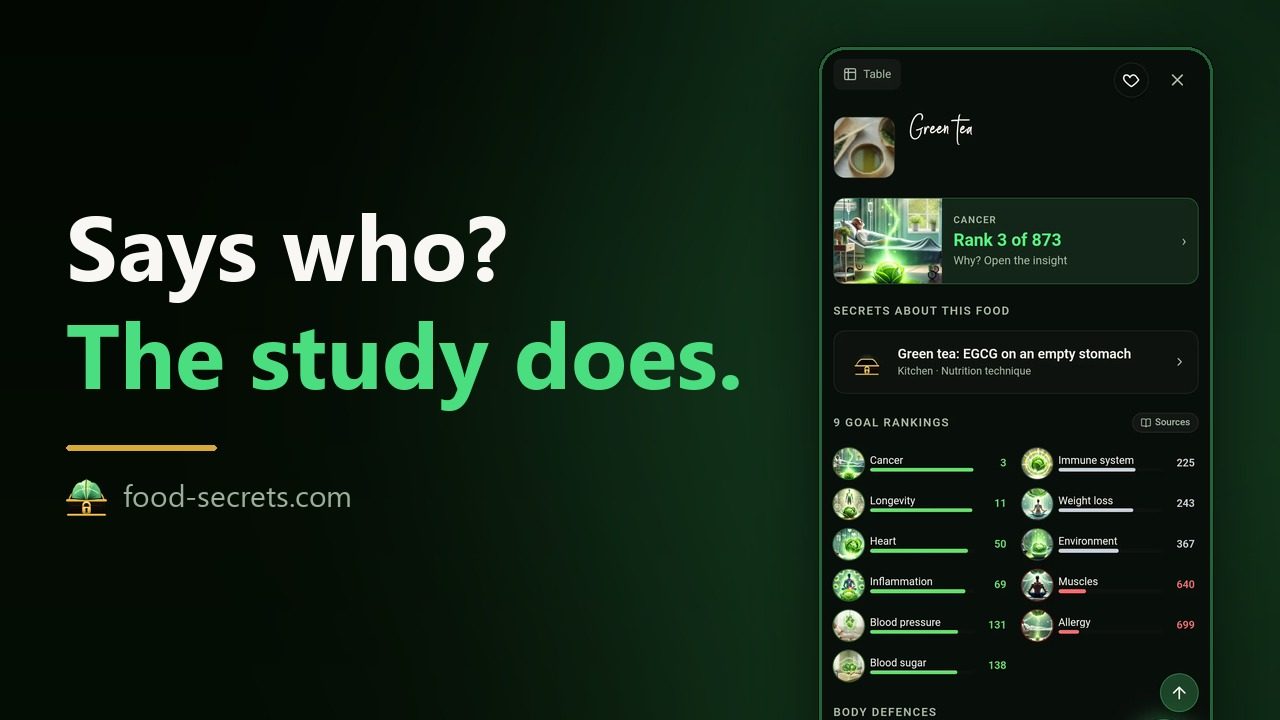
Watch the video on YouTube (29 seconds).
Nutrition tips per goal
From anti-inflammation and lowering blood pressure to immune system, weight loss or muscle building – you get precise tips instead of long articles.
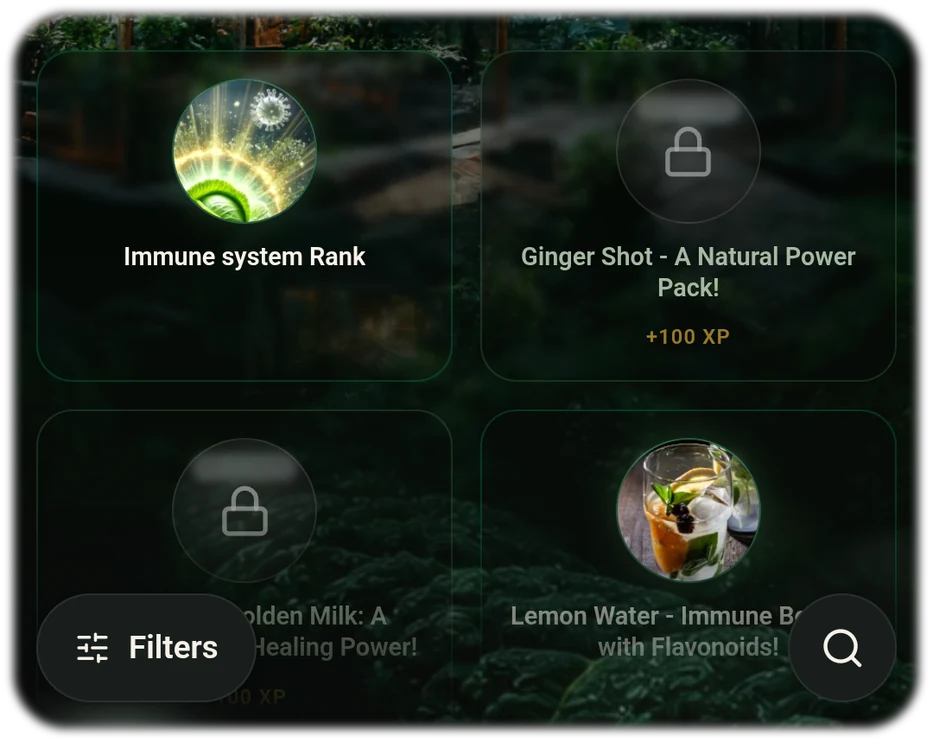
Find more background in the areas Health, Diseases and Fitness.
Popular areas with nutrition tips
Deepen the insights in our topic worlds – with food lists, rankings & recipes:
Phytonutrients – explained briefly & clearly
Polyphenols, glucosinolates (→ sulforaphane), organosulfur & co. – why berries, broccoli, olive oil, green tea, turmeric & ginger land so often in our nutrition tips.
Examples – four popular nutrition tips
Short, science-based tips with a link to food lists, rankings & studies.
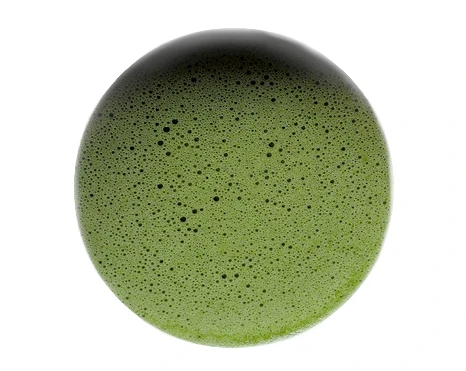
Green tea (EGCG) – concentrated nutrition knowledge
Green tea provides catechins (especially EGCG) – a prominent phytonutrient. In the Food Insights you find briefly explained health aspects and practical nutrition tips, linked with the nutrient table with 1000+ foods & Food Rankings.
- Everyday tip: build 1–2 cups/day into your routine; if you like matcha, you get a higher catechin density.
- Preparation: 70–80 °C, steep briefly – this keeps the aroma mild.
- Combo idea: serve with lemon (vitamin C); fits anti-inflammation goals.
In the app: open the insight → tap to show sources → jump to the food table if needed.
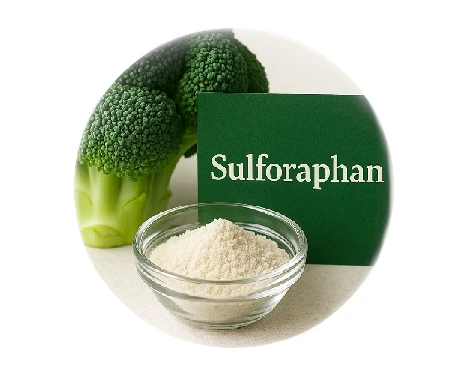
Broccoli & sulforaphane – briefly explained
Cruciferous vegetables provide glucosinolates, from which sulforaphane can form – a central phytonutrient in our nutrition tips (anti-inflammation, cell protection). Especially productive: broccoli sprouts.
- Everyday tip: steam broccoli briefly; use sprouts as a topping.
- Kitchen hack: also use mustard seeds/horseradish (myrosinase source).
- App flow: insight → filter „phytonutrient: sulforaphane“ in the Food Lab → matching foods/recipes.
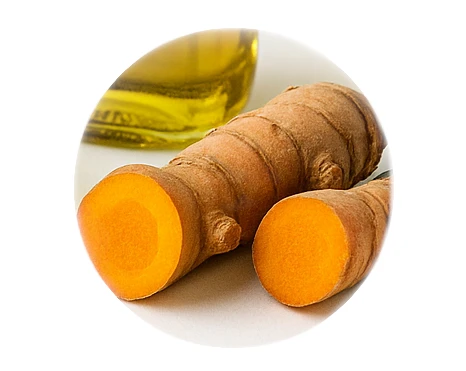
Turmeric & curcumin – anti-inflammation know-how for everyday life
Turmeric provides curcuminoids (especially curcumin) – often recommended in anti-inflammation nutrition tips. In the Food Insights you find the most important effects compactly explained – incl. a link to studies and a direct connection to the food table (Food Lab) & Food Rankings.
- Everyday tip: integrate turmeric into curries, dips, shots or „golden milk“; small daily amounts are practical.
- Bioavailability: combine with pepper (piperine) & a little fat.
- App flow: open the insight → tap sources → filter by „phytonutrient: curcumin“ in the Food Lab → matching foods & recipes.
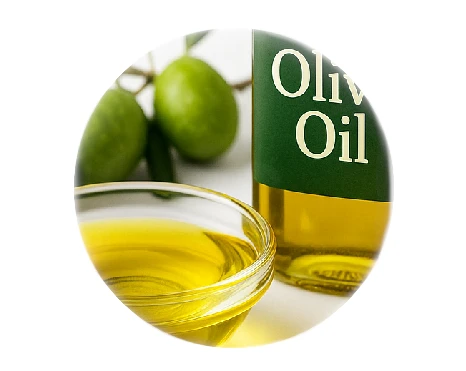
Olive oil & polyphenols – hydroxytyrosol in focus
Extra virgin olive oils provide polyphenols (incl. hydroxytyrosol), which are associated in Mediterranean nutrition patterns with cardiovascular and anti-inflammatory benefits. The Food Insights show you the evidence briefly & concisely – with a study tap.
- Quality marker: a slightly bitter/peppery finish indicates polyphenols.
- Everyday tip: use 1–2 tbsp „extra virgin“ cold daily; use gently for cooking.
- App flow: insight → filter by „polyphenols/hydroxytyrosol“ in the Food Lab → matching foods & recipes.
From tip to food list – and back
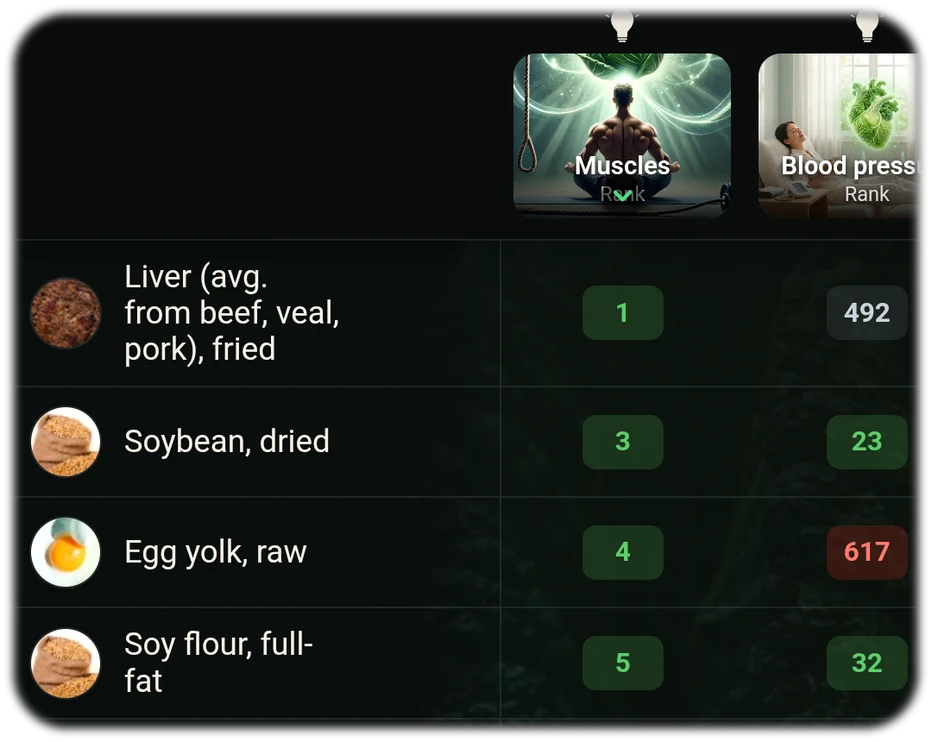
Every insight links directly to the food table and the nutrient table. Conversely, you jump from nutrients, phytonutrients or rankings to matching tips. This turns knowledge into immediate action.
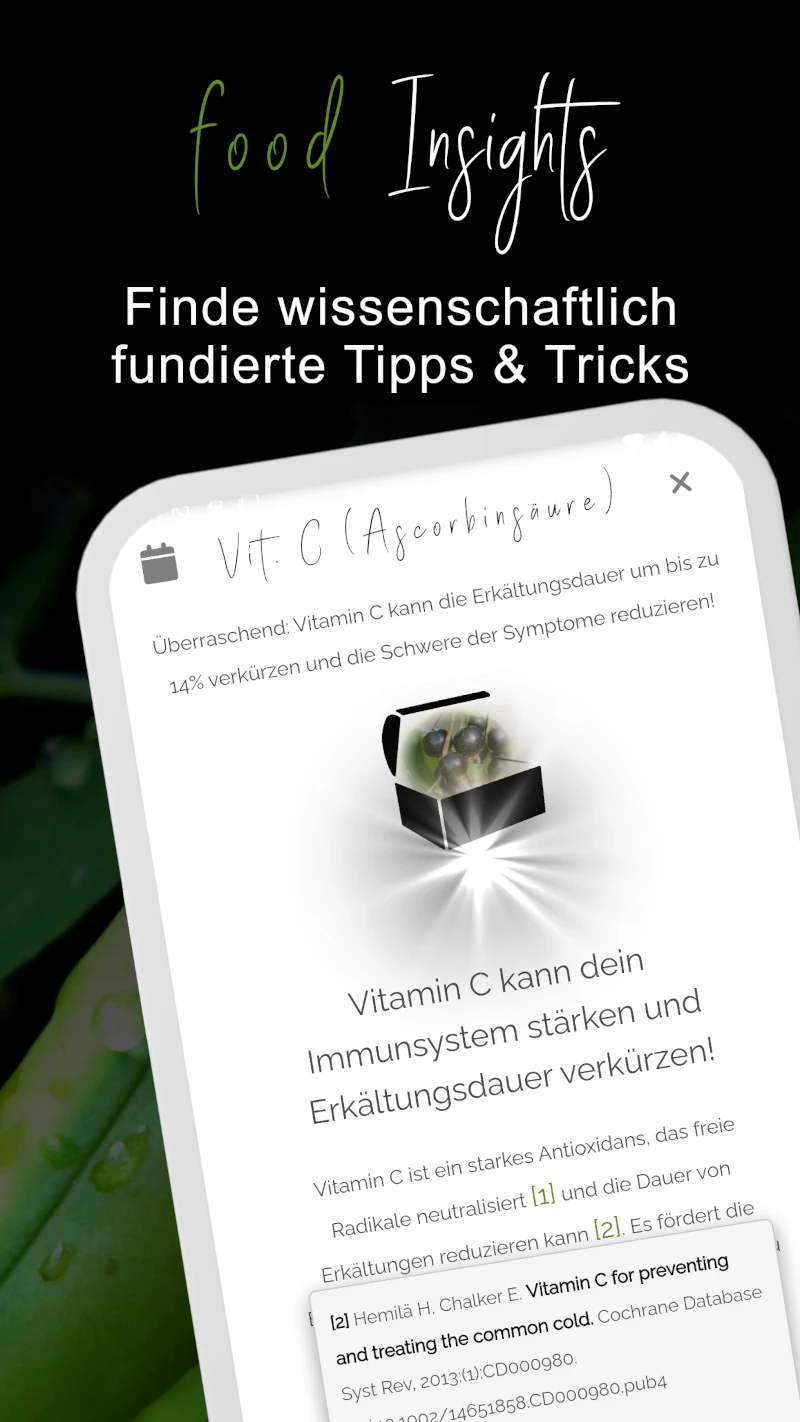
Nutrition studies — one click to read them yourself
Nutrition research is the difference between “considered healthy” and “actually measured”. Behind the 200+ food insights sit over 1000 scientific studies — and one click reaches any of them, instead of you having to take our word for it.
What you see on every insight
- The source — the study's title, year and where it appeared, right on the insight.
- The study type — observational, interventional or a review. It is the single most important detail — and the one advice columns leave out.
- The way to the original — one click and you read it for yourself.
Not every study carries the same weight. An observation of 200 people says something different from a randomised trial of 20,000 — and both reach the press as “study shows”. So we name the type rather than omitting it: you should be able to weigh it yourself, not have to trust us.
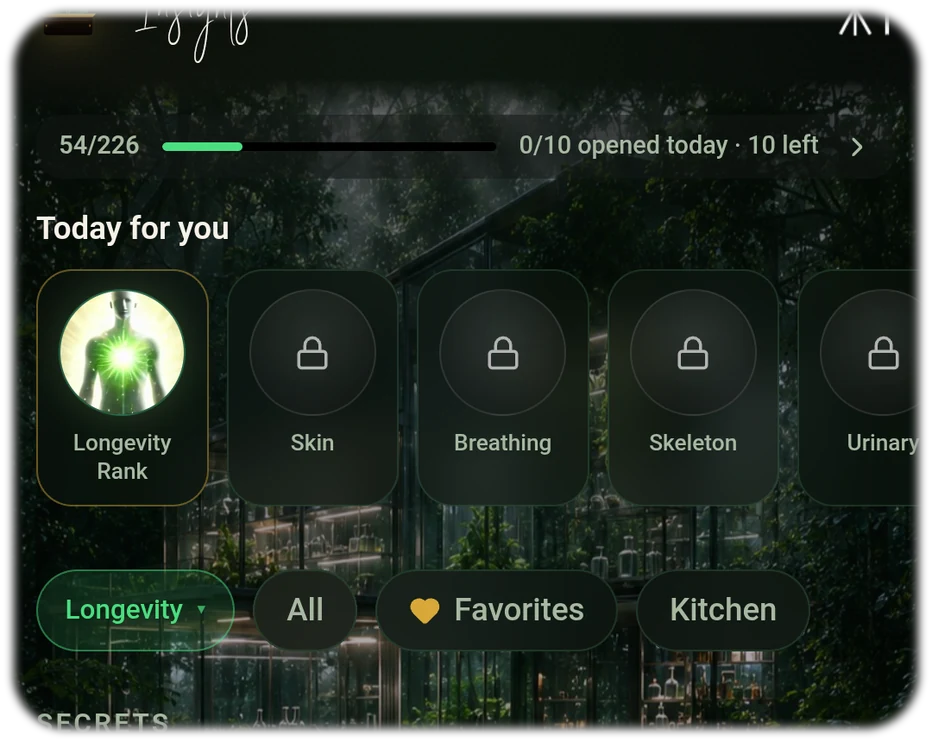
Secrets & treasure vault — knowledge that stays
A nutrition tip you read once is gone the next day. So food Secrets does not hand you everything at once — you get three secrets a day, ten with Pro. Small enough to remember, and often enough that 200+ secrets become real knowledge over weeks.
How the loop works
- Open — three new secrets wait for you every day, matched to your up to 3 goals.
- Read up — every claim leads to the study. No “healthy” that nobody can back.
- Collect — opened secrets stay in your treasure vault. You gather experience and unlock Signature Secrets.

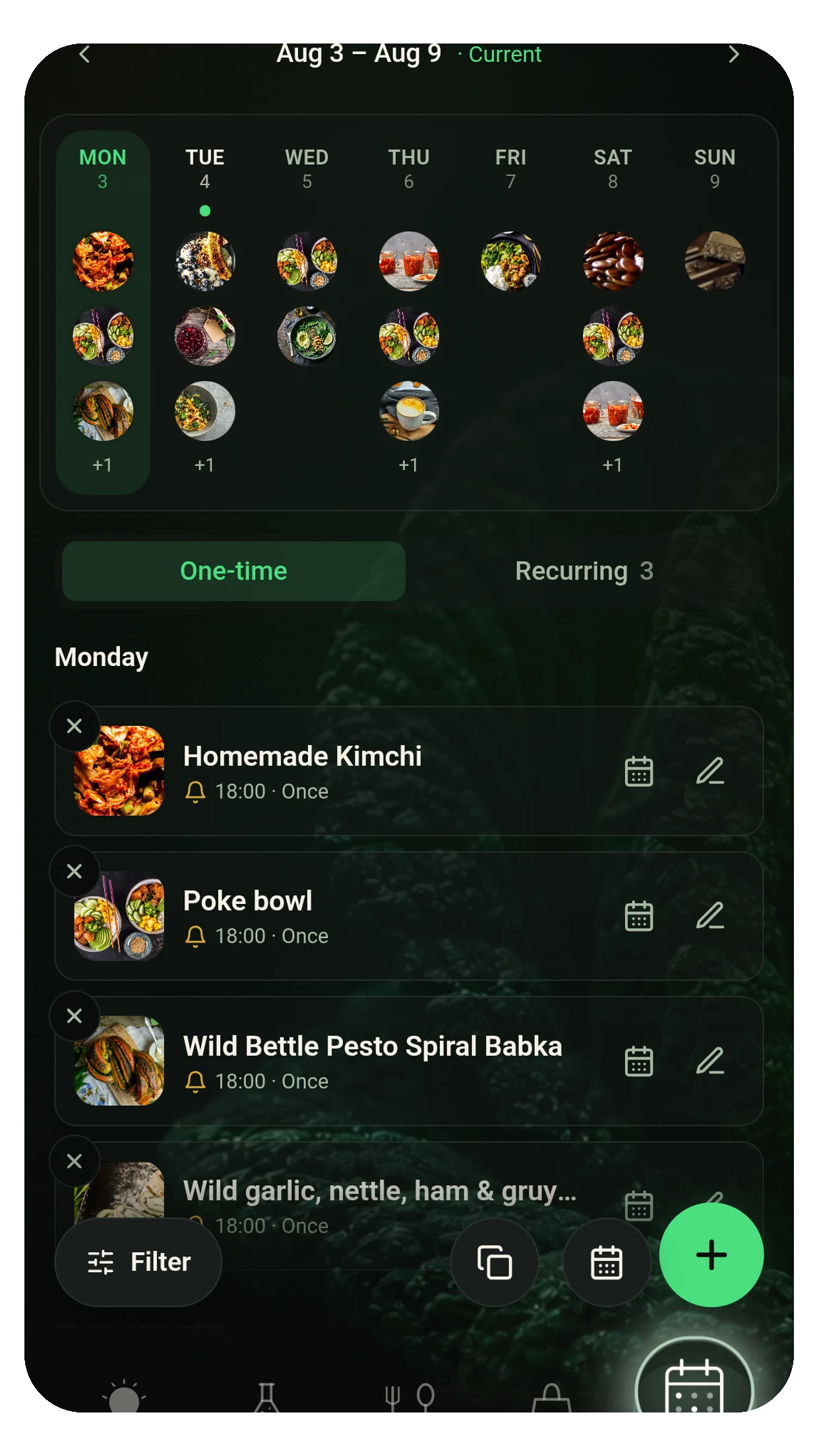
- Schedule — any secret can go into your weekly plan with a reminder. That is what turns knowledge into a habit.
You do not have to hunt for the secrets — they hang on your food. Tap an ingredient inside an imported recipe and you land straight on its nutrient values, its ranking and the secrets behind it. Recipe to ingredient, ingredient to nutrient, nutrient to study — and back the same way to recipes that deliver that nutrient. Everything is linked, in both directions.
The secrets hang on the same 1000+ foods as your recipe analysis. What you learn here shows up again immediately in the Food Lab and in your rankings.
One secret a day, with the study underneath
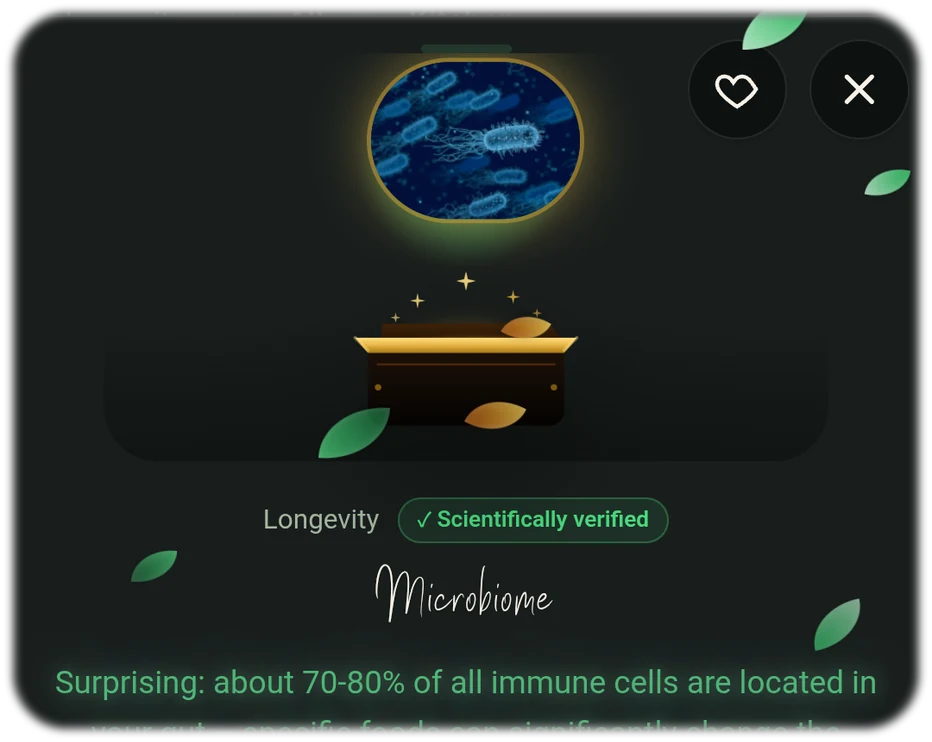
A chest, a secret, and underneath it the paper it came from — journal, year and page. Opened secrets stay in your treasure vault. See the studies
23 seconds: open the chest, read the secret, check the study — watch on YouTube.
Notifications & nutrition plan
Turn an insight into a habit: set a reminder (daily/weekly), add it to your nutrition plan and jump with one tap to a food list or recipes – perfect for anti-inflammation, blood pressure & co.
Linked with the Food Lab
The tips are linked with the nutrition analysis: nutrient values, critical nutrients & our Food Rankings.
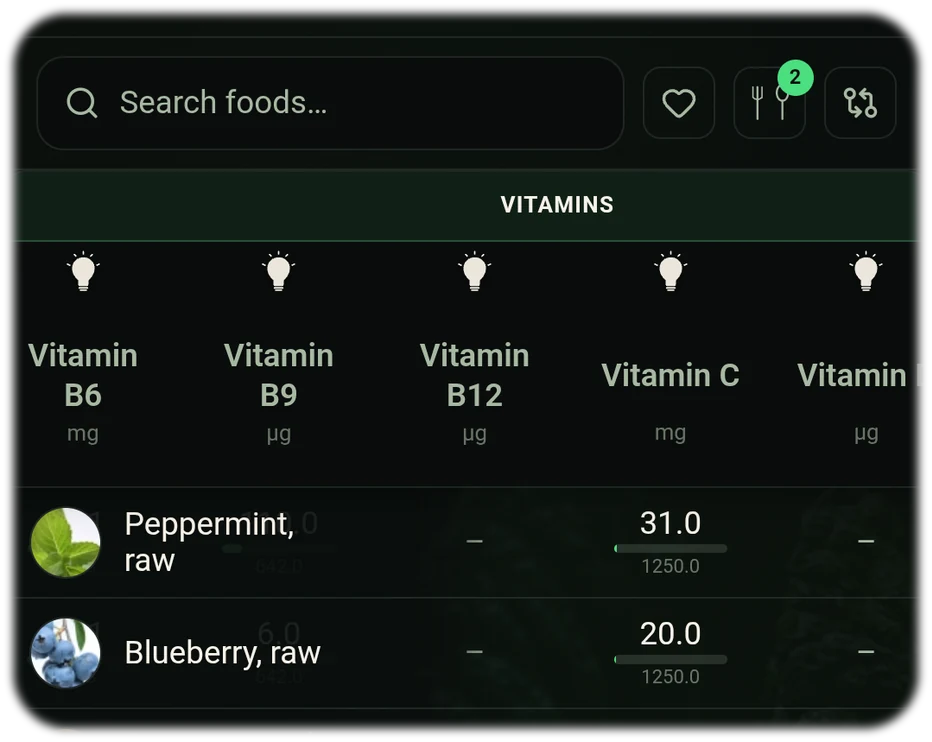
Via the info button you find explanations of columns & rankings.
Tips per nutrient
Brief & concrete: what is the nutrient important for? Where is it found? What are good, practical sources?
With one tap you jump to food lists, recipe import and shopping list.
Start now for free
Choose a goal, see the Food Insights, import a recipe & create your shopping list in seconds.


Optional: premium features can be unlocked anytime.
FAQ – nutrition tips app (Food Insights)
Which app for science-based nutrition tips?
Food Secrets – the nutrition tips app with evidence-based Food Insights, source references to studies, notifications and a direct link to the food table & recipes.
Why does the Food Secrets app help with nutrition tips in everyday life?
Every tip is short, scientifically backed and integrable into your nutrition plan with one tap (reminders). Links lead you directly to matching foods, Food Rankings and recipes.
Can I see studies for the tips?
Yes. The app shows sources (e.g. RCTs/reviews) directly at the tip. One click opens the reference – transparent and verifiable.
What distinguishes our nutrition tips from classic guides?
They are scientifically condensed, linked with a nutrient database, Food Rankings and recipe features – so knowledge becomes everyday practice directly.
Are the nutrition tips scientifically backed?
Yes. We use verified nutrient tables (BLV CH) plus literature on phytonutrients (polyphenols, sulforaphane, curcumin, etc.) as well as established guideline patterns.
Are there tips on anti-inflammation & blood pressure?
Yes. You find anti-inflammatory nutrition tips and recommendations for lowering blood pressure. Plus matching food lists & recipes.
How do I put an insight straight into practice?
Tap set a reminder (daily/weekly) and add the tip to your nutrition plan. This turns knowledge into a new habit – without diet stress.
How do I combine nutrition tips with recipes?
Find matching ingredients based on the nutrition tips from the Food Rankings or your favourites and create recipes directly (or import a recipe). The ingredients and nutrient values update automatically, and the shopping list comes with 1 tap.
How do I get from a tip to the matching food list?
Many insights link directly to the food table and the Food Rankings. If there's no direct link, you'll find the same context in the nutrient table with 1000+ foods via filters (e.g. nutrient, phytonutrient, effect profile).
Does the app work in Switzerland, Germany & Austria?
Yes – we optimise specifically for the DACH region.
Can I be reminded of nutrition tips and integrate them into my nutrition plan?
Yes. Set notifications for each insight (e.g. daily) and plan it in your nutrition plan. This way you establish new habits – without thinking.
Are the tips linked with studies?
Yes. You see the source references in the app and can open the original studies with a tap.
Is green tea healthy – what does research say?
Green tea contains catechins (especially EGCG). In the Food Insights you see a condensed assessment and can show the sources with a tap.
Matcha or classic green tea?
Matcha provides a higher catechin density. Choose what you like and what fits your goals – the app helps with the assessment.
How do I get more sulforaphane from broccoli?
Cook briefly and, if needed, add myrosinase sources (e.g. mustard seeds); broccoli sprouts are especially productive. Details in the insights.
Are there nutrition tips with a study link?
Yes. Every insight offers source references; with a tap you open the original study – transparent and verifiable.
Is turmeric healthy – how do I use curcumin correctly?
Turmeric contains curcumin. For better absorption combine with pepper (piperine) & a little fat. In the Food Insights you find a short assessment with a study link.
How do I recognise a polyphenol-rich olive oil?
With extra virgin, bitter/peppery notes indicate polyphenols (e.g. hydroxytyrosol). The app helps with selection & everyday use.