

Nutrition and common diseases...
...what food can contribute.





Common diseases are rising sharply
According to ourworldindata.org, noncommunicable diseases (NCDs) are increasing sharply. Diet is one of several factors we can influence (source: GBD/ourworldindata).
The most common diseases
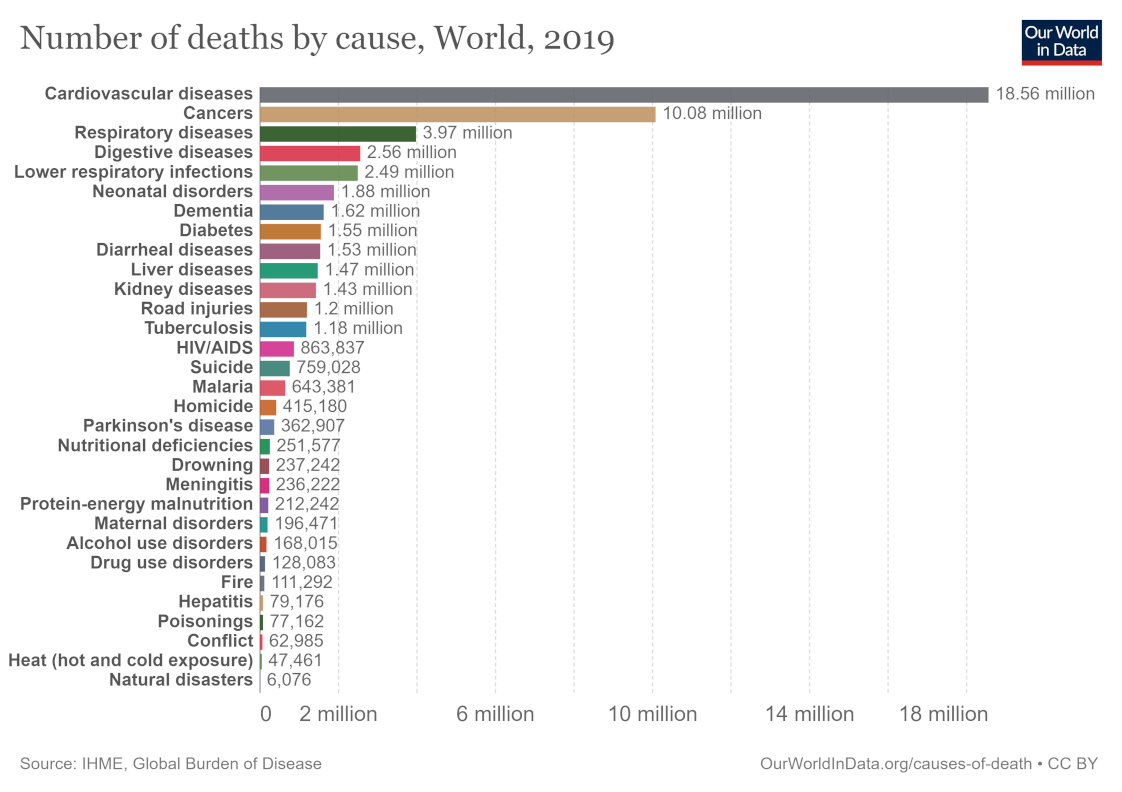
The chart below shows the most common causes of death worldwide in 2019.
Nutrition and disease
The biggest common denominator of these diseases is nutrition. Nutrition is not only the biggest denominator – it is entirely in our hands; we can change it however we like. Other factors that statistically have a far smaller influence on the overall population can't be changed directly – in fact, we can often only influence them through our diet and lifestyle.
Nutrition – the biggest lever
So why not start there and look a little deeper into nutrition? A healthy diet is not only good for your body – it also serves your mental health, your contentment, and is pure enjoyment too!
Nutrition and disease: what food actually contributes
Food is far more than calories. It carries compounds that measurably do something: plant compounds that damp down inflammation, antibacterial, antiviral and antifungal substances, antioxidants that protect cells, and fibre the microbiome works with. Nutrition supplies the nutrients and plant compounds your body needs every day.
How much a given food contributes can be measured, and that is what we do. Dozens of foods in our database carry a documented antibacterial, antiviral or antifungal effect. On top of that every food carries a value for inflammation, blood sugar, blood pressure and cell protection. That produces a ranking per goal.
The areas in detail: cancer, rheumatism and inflammation, heart and circulation and allergies.
What nutrition does not replace is medical treatment. With a diagnosis or an ongoing therapy it belongs in the conversation with your doctor — as part of it, not instead of it. This page gives you the data to bring to that conversation.
Frequently asked questions
What does nutrition contribute when you are ill?
It supplies nutrients and plant compounds your body needs every day. It does not replace treatment: if you are ill, discuss your diet with your doctor.
The Food Secrets app holds all 1000+ foods sorted by your goal, with the values behind every rank.
What foods are good for high blood pressure?
Leading our blood-pressure ranking: cocoa, chia seeds, soybeans and beans, berries such as cranberry and aronia, flaxseed and spinach. The common factor is not one compound but a combination of potassium, polyphenols and nitrate with very little salt.
The bigger effect usually comes from the other direction: less salt out of processed products. Checking the salt content of the foods you eat most often tends to beat any addition. Those figures sit on every food in the app.
The ranking in the Food Secrets app shows how far up each of these foods sits for your goal — and why.
What are anti-inflammatory foods?
At the front of our inflammation ranking: chia seeds, hemp seeds, cranberry, walnut, blueberry, oregano, turmeric and kale; sardine follows in the Top 20, black seed oil in the Top 50. Among wild plants, dandelion and nettle join them.
Three mechanisms sit behind that: omega-3 fatty acids shifting the ratio against omega-6, polyphenols such as anthocyanins and curcumin, and fibre that the microbiome turns into short-chain fatty acids.
More in the rheumatism and inflammation area.
food Secrets
Reach all your goals!
With our nutrition app you have everything about nutrition in one app, always at hand.