
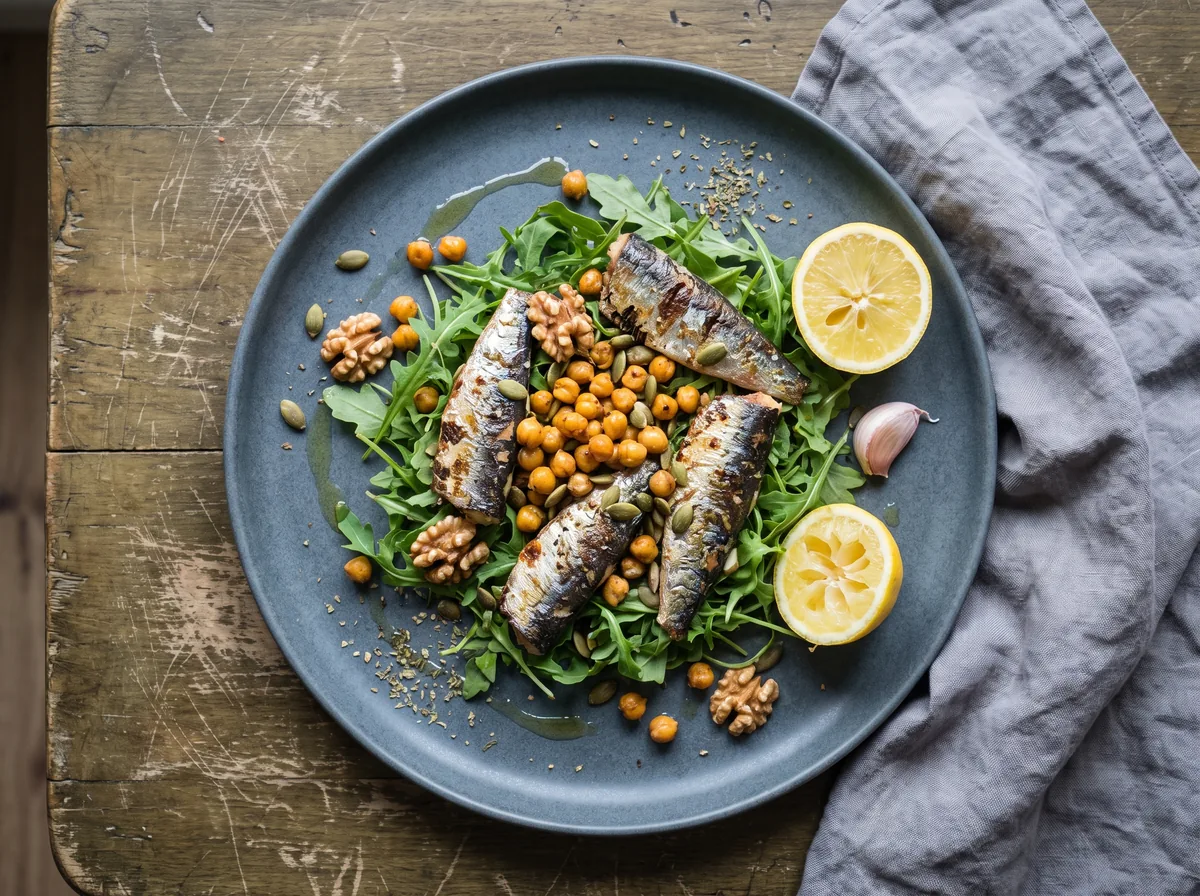
An anti-inflammatory recipe built as a whole meal: crisp pan-fried sardines, roasted chickpeas and rocket. Ready in 25 minutes – and in the Food Secrets app the plate lands in the Top 100 of 1000+ rated foods for the goal inflammation.
Open the recipe straight in the Food Secrets app. The app reads the ingredients, links each one to the nutrient database and recalculates the rank for your goal.
Ingredients for 2 servings
- Rocket (arugula)80 g
- Sardines in oil, drained90 g
- Chickpeas, cooked120 g
- Walnuts30 g
- Pumpkin seeds20 g
- Garlic1 clove
- Oregano, dried1 tsp
- Olive oil2 tbsp
- Lemon1/2
Plus pepper and – only if needed – salt. Step 6 explains why it goes in last.
Method
- Drain the chickpeas and pat them dry with kitchen paper. Roast them in 1 tbsp olive oil over medium heat for 8–10 minutes, until crisp on the outside. Finely chop the garlic and roast it with them for the last minute. Take everything out of the pan.
- Roughly chop the walnuts. Toast them with the pumpkin seeds in the same pan, without fat, for 2–3 minutes until fragrant. Remove.
- Drain the sardines and pat them thoroughly dry. This step decides between crisp and soft – wet sardines steam instead of frying.
- Heat the pan properly. Fry the sardines for 1–2 minutes per side, until the skin is crisp. Only turn them once they release from the pan by themselves.
- Wash the rocket, spin it dry and divide it between two plates.
- Whisk the remaining olive oil with the juice of the half lemon and the oregano. Season with pepper. Salt only now, and only if needed – tinned sardines are already salted, and so are most jarred chickpeas.
- Scatter the sardines, chickpeas, nuts and seeds over the rocket. Spoon the dressing on top and serve straight away.
Why this plate works against inflammation
Every ingredient carries its band from the Food Secrets inflammation ranking. A band is stable – a place number changes with every data release, and the app shows you the exact figure.
- Top 10WalnutsThe plant omega-3 source with the highest ALA content among the nuts.
- Top 50SardinesEPA and DHA directly, with no detour through the metabolism. Small fish, little heavy metal.
- Top 50OreganoCarvacrol and rosmarinic acid – two of the densest polyphenol sources in the spice rack.
- Top 100RocketA brassica carrying glucosinolates, from which the body forms sulforaphane.
- Top 100GarlicAllicin and other sulphur compounds, which only form once you chop it.
- Top 100Olive oilOleocanthal, the antioxidant with an ibuprofen-like mechanism.
- Top 250Pumpkin seedsMagnesium and zinc, both involved in regulating inflammatory processes.
- FillingChickpeasThe filling carbohydrate of the plate. Slow starch and fibre for the microbiome.
- FlavourLemonIt is here for the acidity and for iron absorption, not for the inflammation balance.
Averaged and weighted by category, the plate lands in the Top 100.
For more enjoyment – and what it costs
A recipe nobody cooks twice is worth nothing. These three additions round the plate out. We calculated each one so you can decide for yourself:
- Cherry tomatoes, 100 g halved – almost free. Sweetness and juice, and the plate stays in the Top 100. If you add only one thing, add this.
- Feta, 50 g crumbled over – creamy and salty. The plate stays in the Top 100 but drops back. In exchange you need no salt at all in the dressing.
- An orange, segmented – fruit with the fish. Classic Sicilian: sardine and orange. The plate stays in the Top 100, and the lemon can then be dialled back a little.
All three stay clearly in the upper half of 1000+ foods. A plate you enjoy beats the perfect one you leave standing.
From the recipe into the detail: tap an ingredient
The plate is the entry point, not the end. In the app, tap an ingredient inside the imported recipe and you land straight in that food's detail view:
- The ranking per goal. Sardines sit high for inflammation – on the same page you see how they do for heart, immune system or longevity.
- The compounds behind it. Every food carries the substances that do the work: sulforaphane in rocket, EPA and DHA in the sardine, oleocanthal in olive oil.
- The studies. Behind each compound are the sources the rating rests on – readable, not asserted.
Variations
Every variation is recalculated. Where the band changes, it says so.
- Without fish: swap the sardines for 60 g hemp seeds. Hemp seeds sit in the Top 50 for inflammation, so the plate stays in the Top 100 – but it loses EPA and DHA, which only come from the fish.
- More protein: add 100 g cottage cheese. Good for how filling it is, but cottage cheese is not an anti-inflammatory food: the plate falls into the Top 250.
- Warmer and sweeter: swap the chickpeas for 150 g diced sweet potato, 20 minutes in the oven. Just as filling, but it costs places: the plate stays in the Top 100 but drops back.
- Hotter: a pinch of cayenne pepper. The only variation that improves the plate. Chilli itself sits in the Top 100 for inflammation and in the Top 50 for the immune system.

Ingredients onto the shopping list, recipe into the week plan – in one step.
Frequently asked questions about this recipe
Are canned sardines healthy?
Yes. Canned sardines deliver EPA and DHA in the same order of magnitude as fresh fish, and because they are small and short-lived they accumulate almost no heavy metal. Two things to watch: pour off the oil from the tin and use your own olive oil, and season at the very end – tinned sardines are already salted.
Which foods are the most anti-inflammatory?
At the front of the Food Secrets inflammation ranking: walnuts and chia seeds, watercress, berries such as elderberry, blackcurrant, cranberry and blueberry, plus kale, linseed and turmeric. Oily fish such as the sardine follows in the Top 10, rocket, raw broccoli and extra virgin olive oil in the Top 100. Five of them are in this recipe. The full list is in the anti-inflammatory diet app.
How often should I eat oily fish?
The common recommendation is one to two portions a week. Small fish such as sardine, anchovy or herring are the best choice, because they accumulate the fewest contaminants. If you are pregnant or have an existing condition, discuss it with your doctor.
Can I make this recipe vegetarian?
Yes. Replace the sardines with 60 g hemp seeds. The plate stays in the Top 100 for inflammation, because hemp seeds themselves rank very high. What is missing is EPA and DHA – the two omega-3 fatty acids the body only makes from plant ALA in small amounts.
How long does the plate keep?
Roasted chickpeas, nuts and seeds keep for two days in a sealed jar at room temperature. Rocket, sardines and dressing go on just before eating. Dressed rocket collapses within an hour.
What does “Top 100” mean at Food Secrets?
The app rates 1000+ foods against over 25 scientific metrics and gives each one a rank per goal. “Top 100” means: averaged across all ingredients, this recipe sits among the best hundred for the goal inflammation. We print bands rather than place numbers, because the database keeps growing – the app works out the current figure itself.
More healthy recipes and food rankings
- Anti-inflammatory diet: app, food list and recipes – the groundwork, the full ranking of anti-inflammatory foods and how the app calculates it.
- Recipe generator: import and analyse healthy recipes – read in any recipe from the web, calculate the nutrients and build the shopping list automatically.
- All healthy recipes by goal – recipes for inflammation, heart, the immune system, blood sugar and other health goals.
- Nutrition for inflammatory rheumatism – what changes in practice once the inflammation is chronic.
- Active compounds in food – what is behind the ranks, and the studies for them.
The bands on this page are a snapshot of the Food Secrets ranking. The database keeps growing, which is why we name ranges rather than place numbers – the app works out the current value at any time. The information provided is for general education and does not replace medical advice or treatment.